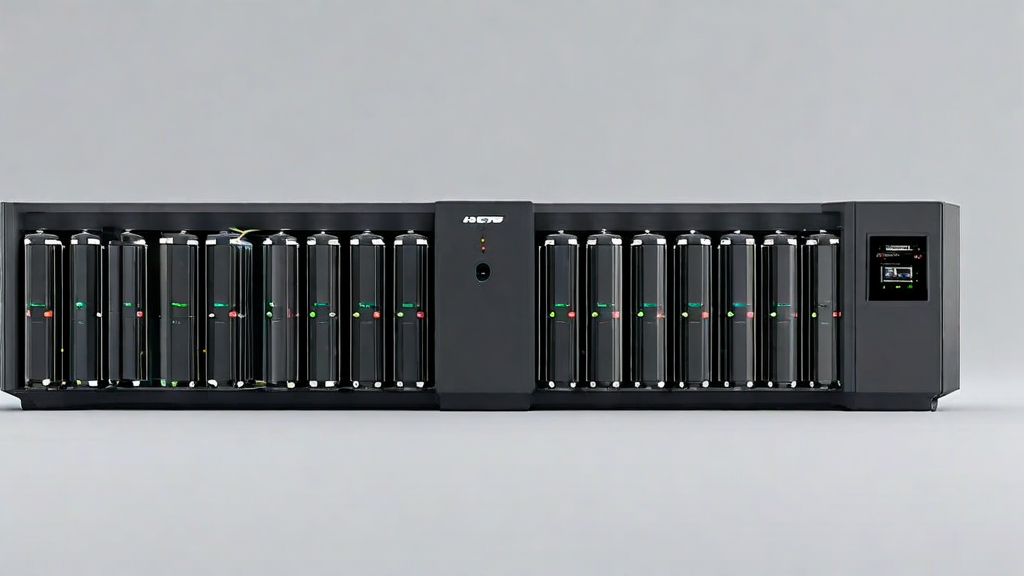
Flight endurance is one of the most persistent constraints on the utility of commercial drones for industrial applications. A multirotor drone lifting a meaningful sensor payload in still air typically achieves 25–40 minutes of flight time per battery charge — enough for many inspection scenarios, but insufficient for extended corridor surveys, large-area mapping missions, or continuous monitoring operations that require coverage over extended time periods without operator intervention for battery exchanges.
The physics underlying this limitation are fundamental. Multirotor drones must continuously generate lift by accelerating air downward, which requires continuous motor power. The ratio of payload mass to total aircraft mass, the aerodynamic efficiency of the propulsion system, and the energy density of the onboard power source collectively determine how long the drone can remain airborne. Increasing any one of these factors yields diminishing returns as mass compounds — heavier batteries have higher capacity but also require more power to lift, partially offsetting their capacity advantage.
Lithium Polymer Batteries: Current Performance and Limitations
Lithium polymer (LiPo) batteries dominate the commercial drone market due to their high specific energy, favorable discharge characteristics for high-current motor applications, and availability across a wide range of form factors. Modern aerospace-grade LiPo cells achieve specific energy of 200–270 Wh/kg, with the best available cells in laboratory conditions approaching 300 Wh/kg. At the pack level, after accounting for the mass of cell interconnects, battery management systems, housings, and thermal management components, practical pack-level specific energy for commercial drone batteries typically falls in the 150–220 Wh/kg range.
LiPo batteries are sensitive to operating conditions in ways that matter significantly for industrial drone operations. Cold temperatures — below 10°C — substantially reduce available capacity and power output, shortening flight time and potentially triggering voltage sag-induced return-to-home behaviors. High ambient temperatures accelerate degradation over the battery lifecycle, reducing the number of charge cycles before capacity falls to an operationally unacceptable level. Industrial drone programs operating in extreme climate conditions need battery management protocols that account for these sensitivities: pre-warming batteries before flight in cold conditions, avoiding charging immediately after high-current discharge in hot conditions, and monitoring cell-level health data to identify packs approaching end of operational life.
Cycle life is a significant operational cost factor in high-utilization industrial programs. Commercial-grade LiPo packs typically achieve 200–400 full-charge-discharge cycles before capacity drops to 80% of original specification — the threshold typically used to define end of operational life. For programs flying multiple cycles per day, battery replacement cost represents a meaningful fraction of total operational cost, making procurement of higher-cycle-life cells and adherence to charge protocols that preserve cycle life economically important.
Hydrogen Fuel Cells: Extended Endurance with Different Trade-offs
Hydrogen fuel cell systems represent the most commercially advanced alternative to battery propulsion for extended endurance drone applications. Fuel cells generate electricity through the electrochemical reaction of hydrogen with oxygen from ambient air, producing water as the only exhaust product. The specific energy of compressed hydrogen gas is approximately 33 kWh/kg, dramatically exceeding lithium chemistry — even accounting for the efficiency losses of the fuel cell system and the mass of the fuel cell stack, hydrogen system, and pressure vessels, total drivetrain-level specific energy of commercial fuel cell drone systems is typically 300–600 Wh/kg equivalent, enabling 90–120+ minute flight times on hydrogen-powered drones.
Commercial fuel cell drone systems are available from multiple manufacturers and have been deployed in industrial inspection and survey applications where extended endurance is critical. The operational model differs from battery-electric drones: rather than recharging from an electrical power source, the drone is refueled by exchanging the hydrogen cartridge or canister between flights, with refueling taking two to five minutes depending on the system design. This rapid refueling cycle enables very high daily operational tempo — a fuel cell drone can conduct six to eight inspection flights per day with minimal downtime, compared to the two to four cycles per day practical with battery-electric drones accounting for recharge time.
The trade-offs of fuel cell systems are real and must be evaluated carefully for each application. Hydrogen cartridges and canisters require transport and storage under aviation hazardous materials regulations. The fuel cell stack itself has a service life measured in operating hours that requires monitoring and planned replacement. The power density of fuel cells is lower than batteries, meaning hybrid architectures that combine a fuel cell for cruise power with battery boost for peak power maneuvers are common in commercial implementations. Cold weather operation requires thermal management of the fuel cell stack to maintain operating temperature.
Fixed-Wing and VTOL Hybrid Configurations for Extended Range
An alternative approach to extending effective range and endurance without addressing the underlying energy storage challenge is modifying the aircraft configuration. Fixed-wing aircraft achieve dramatically better aerodynamic efficiency than multirotor platforms — lift-to-drag ratios of 15–25:1 compared to the effective lift-to-drag ratio of 3–5:1 for typical multirotors. A fixed-wing drone consuming the same battery capacity as a multirotor can fly three to five times further, making fixed-wing configurations attractive for corridor surveys, pipeline monitoring, and large-area mapping missions where point-to-point coverage distance is the primary constraint.
The limitation of pure fixed-wing configurations for inspection applications is the inability to hover and station-keep for close-range inspection of specific components. Vertical take-off and landing (VTOL) hybrid configurations address this by combining a fixed-wing aircraft capable of efficient forward flight with multirotor lift motors that enable vertical takeoff, landing, and limited hover capability. These aircraft offer substantially better range and endurance than multirotors on battery power while retaining enough hover capability for many inspection tasks, representing an effective compromise for mission profiles that require both transit efficiency and inspection hover.
Tethered Drone Systems for Persistent Aerial Operations
For applications requiring persistent aerial presence at a fixed location — continuous security monitoring, communication relay, or extended construction site observation — tethered drone systems eliminate the endurance constraint entirely by supplying power to the drone through a cable connected to a ground power source. Tethered systems can maintain a drone at altitude indefinitely within the cable length constraint (typically 50–100m), supplying full motor power without any battery weight penalty.
The operational constraint is obviously the tether itself — the drone cannot depart the tether radius, and the cable must be managed carefully to avoid entanglement with obstacles. For fixed-position monitoring applications within a defined perimeter, these limitations are acceptable trade-offs for the unlimited endurance that tethering enables. Industrial applications including construction site monitoring, event security support, and communications relay in disaster response have deployed tethered systems successfully for extended operations requiring continuous aerial coverage.
Battery Management and Operational Best Practices
Regardless of the energy source technology, systematic battery management is critical for both performance optimization and safety in industrial drone programs. Battery management system (BMS) data — cell-level voltage, temperature, and current data captured during each cycle — provides the foundation for intelligent fleet management and early identification of degrading packs before they become operational risks.
Storage practices significantly affect LiPo longevity. Batteries stored at partial state of charge (typically 40–60% capacity, known as storage charge) age more slowly than batteries stored fully charged or fully discharged. Enterprise programs that build storage-charge protocols into their post-flight procedures — automatically discharging to storage voltage on smart chargers at the end of each operational day — measurably extend fleet battery life compared to programs without systematic storage management.
Temperature management during charging is equally important. LiPo batteries should not be fast-charged when cold (below 10°C) — the electrochemical processes at low temperature cause lithium plating that damages cell structure and reduces cycle life. Smart chargers that monitor cell temperature and modulate charging current accordingly protect packs in cold-weather deployments. In hot climates, allowing packs to cool after flight before beginning the next charge cycle reduces thermal stress on cells and extends life.
Key Takeaways
- Current commercial LiPo battery technology achieves 150–220 Wh/kg at pack level, enabling 25–40 minute flight times for typical payload configurations
- Hydrogen fuel cells offer 300–600 Wh/kg equivalent energy density and enable 90–120+ minute flights, at the cost of hydrogen logistics and regulatory compliance
- Fixed-wing and VTOL hybrid configurations multiply effective range by 3–5x versus multirotors on equivalent battery capacity, trading hover capability for transit efficiency
- Tethered systems eliminate endurance constraints for fixed-position monitoring applications within cable range
- Temperature management during storage and charging has measurable impact on battery cycle life in industrial programs
- BMS data monitoring enables proactive identification of degrading batteries before they create operational reliability or safety risks
Conclusion
Battery energy density has improved gradually over the past decade, and ongoing materials research in solid-state electrolytes and silicon anode chemistries offers the prospect of further significant improvements in the coming years. Solid-state batteries, when they achieve commercial manufacturing scale, may deliver 400–500 Wh/kg at cell level — a step change that would extend multirotor flight times to 60–80 minutes on equivalent pack mass. These advances remain years from widespread commercial availability, but the technology trajectory is positive.
In the near term, industrial drone programs maximize endurance through a combination of aircraft configuration optimization for the specific mission profile, systematic battery management practices that preserve cycle life and maximize per-cycle capacity, and operational design that structures mission plans to use available flight time efficiently. The programs that treat endurance as a systems engineering challenge — optimizing across aircraft, battery management, operational design, and supporting infrastructure — achieve meaningfully better results than those focused solely on hardware specifications.